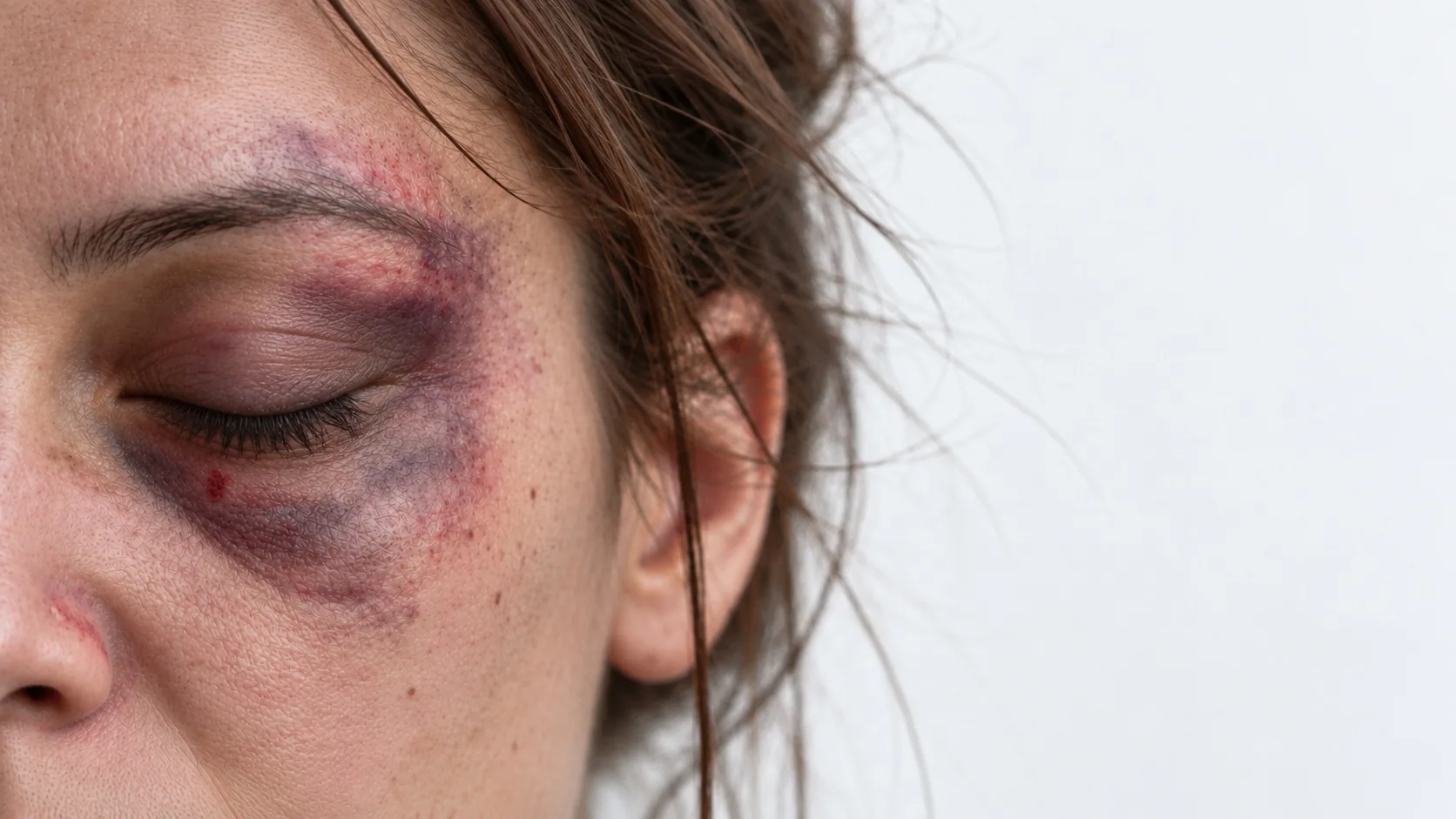

SAME INJURY. DIFFERENT STORIES. A MORE SHARED LANGUAGE.
for a Shared Language
BRUISE Trace
An image-analysis tool for tracking visible changes in bruises.
BruiseTrace started from a simple question : How can measuring a bruise help doctors, patients, victims, and police speak a common language?
HOW IT WORKS
Upload Image → Select Bruise Area
→ Analyze → Interpret Results
BruiseTrace guides users from uploading a photo to a more readable interpretation. The tool analyzes the bruise area, summarizes color-based findings, and returns readable results rather than a diagnosis.
-
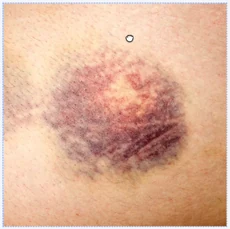
Upload Image
Take or upload
a clear photo. -
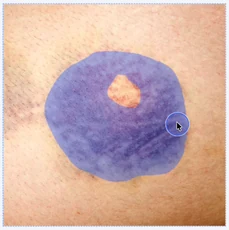
Select Area
Mark the bruise area to analyze.
-
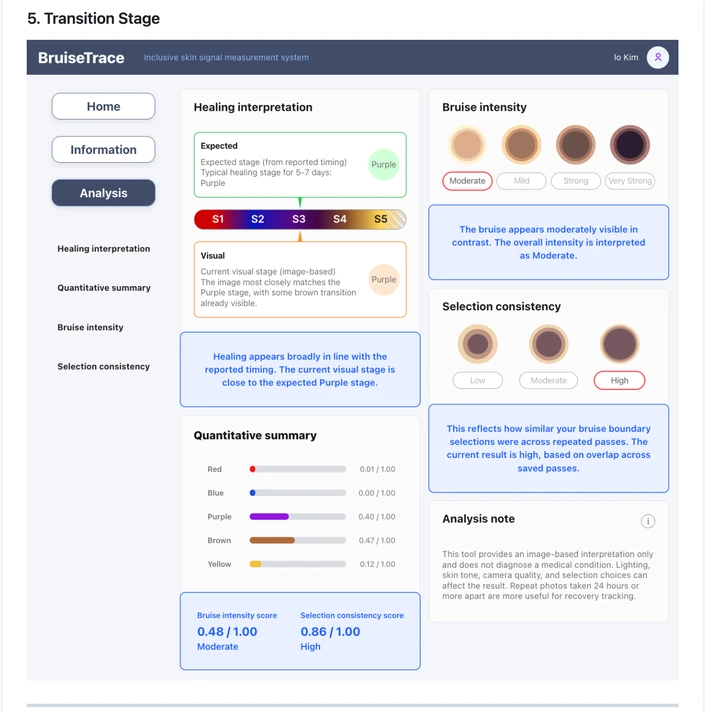
Analyze
Measure color, size, and pattern.
-
Recovery appears slightly slower than expected.
The bruise looks earlier in healing than the reported timing suggests.
Interpret
See visual results and plain-language
interpretation.
 bruisetrace.app


CONVERSATIONS THAT SHAPED BRUISETRACE
I shared the prototype with medical professionals, designers, and everyday users to understand what information mattered, what could be misleading, and how the tool could become more useful. Their feedback helped reshape both the interface and the purpose of the tool.
-
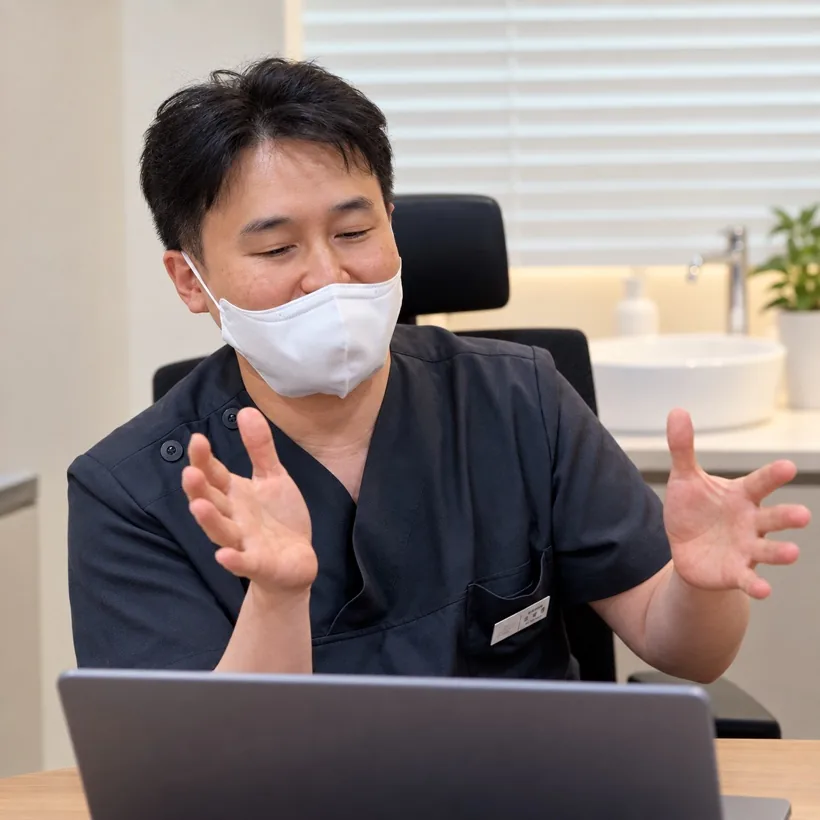

Medical Professionals
dermatology, plastic surgery, clinical perspectives
-


Designers / Developers
graphic design, UI/UX,
app development -
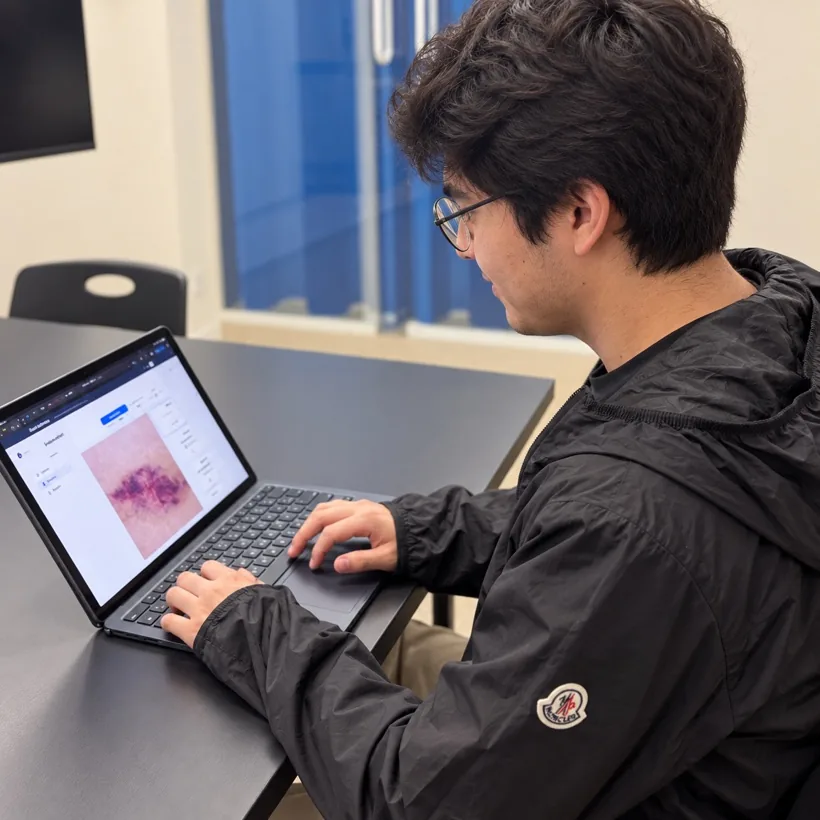

Everyday Users
different ages, needs,
and levels of familiarity
KEY INSIGHTS
-

CONTEXT
A bruise is more than color. Location, cause, timing, symptoms, skin tone, medication, and history all shape interpretation.
-

INTERPRETATION
Numbers need meaning. Users wanted to know whether a bruise seemed mild, changing, or worth attention.
-

VISIBILITY
What we see is not the whole condition. Lighting, skin tone, image quality, and depth affect what appears in a photo.
-

ROLE
The tool should support judgment, not replace it. BruiseTrace is most useful for monitoring, education, and communication.
FROM FEEDBACK
TO THE NEXT ITERATION
The revision process mattered as much as the prototype itself. By listening to conflicting perspectives and testing assumptions, BruiseTrace gradually became more thoughtful, more usable, and more honest about what it can and cannot do.
I did not treat feedback as a final verdict. I used it to decide what to question, test, and change next.
-
“The tool's purpose wasn't clear at first.”
Clarified the interface and added clearer guidance for different users.
-
“Color alone is not enough to understand a bruise.”
Added more context around visible change—such as timing, location, cause, skin tone, symptoms, and user history.
-
“Users want to know what the result means.”
Shifted the emphasis toward interpretation, monitoring, and shared understanding—not stand-alone diagnosis.

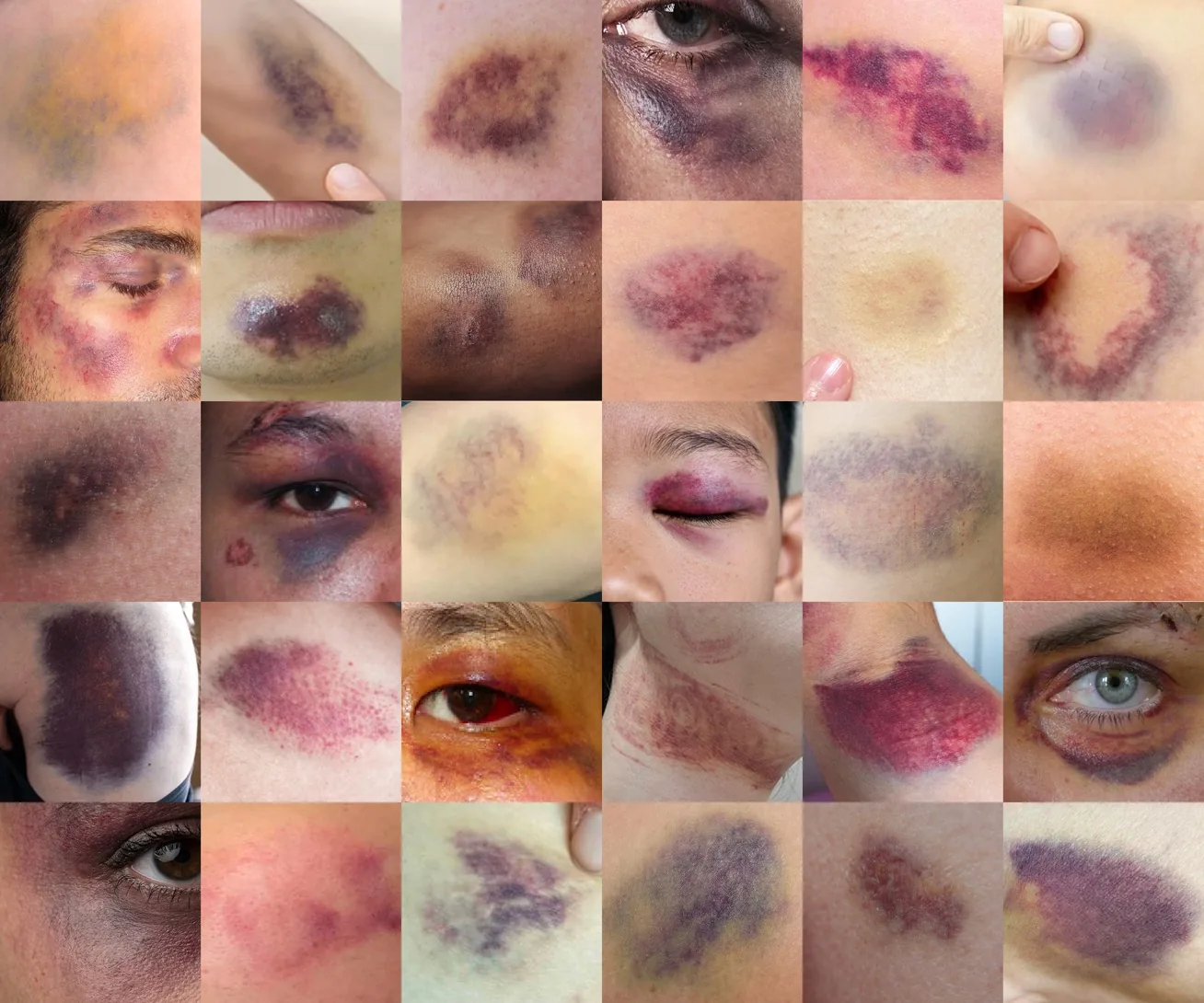
The goal is not to replace human judgment, but to give different people something more consistent to discuss.
BruiseTrace remains a work in progress shaped by observation, feedback, and revision.